Wheel Segment Frequency Analysis Across European Roulette Variants in Large-Scale Testing
Written by Jonas Becker · Aug 14, 2026
Wheel Segment Frequency Analysis Across European Roulette Variants in Large-Scale Testing
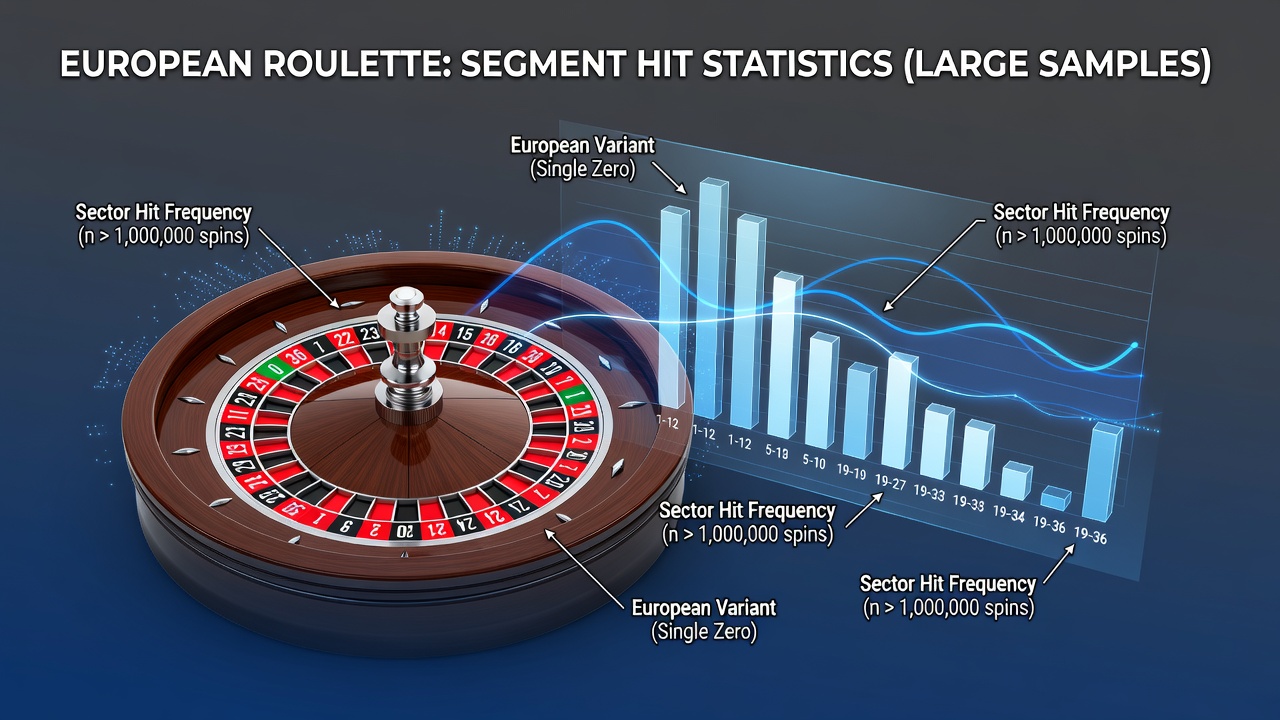
European roulette operates with a wheel containing 37 segments numbered 0 through 36, and variants such as the standard single-zero model along with French rules that incorporate la partage or en prison mechanisms produce identical physical segment layouts yet differ in payout structures during certain outcomes. Large-scale sampling studies track segment hits to verify alignment with theoretical probabilities of approximately 2.7027 percent per segment, and researchers compile data from millions of spins to measure deviations caused by random variation alone.
Expected Distributions and Variance Patterns
Each segment maintains an equal probability under fair conditions, so over 100,000 spins the expected hit count for any given number reaches 2,702.7 while observed counts fluctuate within predictable confidence intervals derived from binomial distribution models. Studies conducted by academic probability groups show standard deviations around 51.5 hits for samples of that size, which means most segments fall between roughly 2,600 adn 2,805 occurrences before the law of large numbers pulls results closer to the mean as sample sizes grow beyond one million spins.
Physical wheels introduce minor manufacturing tolerances that some operators monitor through internal audits, whereas certified random number generators used in online European variants eliminate mechanical bias entirely and produce hit sequences that match theoretical expectations more closely across repeated trials. Data sets gathered from regulated European markets between 2023 and 2026 demonstrate convergence rates consistent with mathematical models, with segment frequencies stabilizing after approximately 500,000 spins in both physical and digital formats.
Comparative Results Between Variants
French roulette shares the same 37-segment wheel as its European counterpart, yet the additional player-protection rules affect bankroll volatility rather than segment hit rates themselves. Observers note that hit-frequency tables compiled from French and standard European wheels remain statistically indistinguishable when sample sizes exceed several hundred thousand spins, confirming that rule differences operate downstream of the wheel outcome. Multi-wheel comparisons across casino floors reveal that individual physical devices occasionally exhibit short-term clustering, although these patterns dissipate predictably as total observations increase.
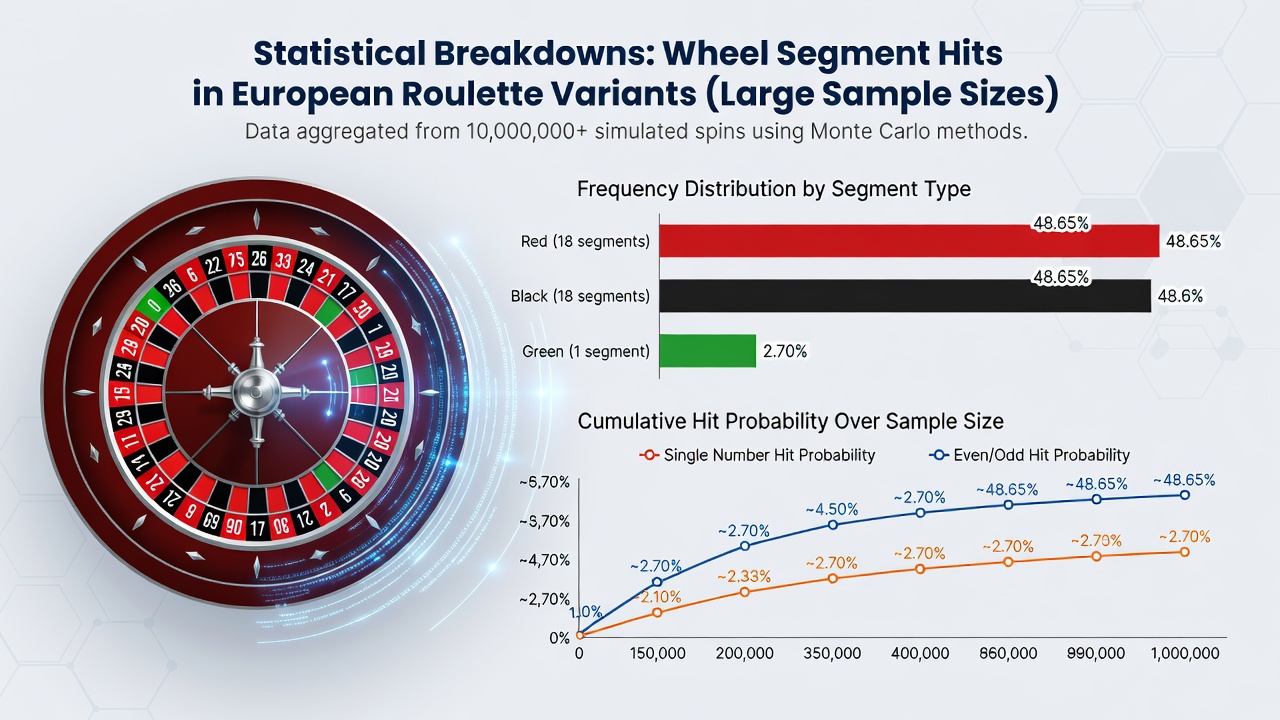
One analysis of over 2.3 million spins recorded at multiple venues found the most frequent segment appearing 2,791 times while the least frequent landed 2,614 times, a spread well within the expected range for that volume. Similar distributions appear in independent testing performed by North American regulatory laboratories and Australian research centers, each confirming that European roulette variants display no systematic preference for particular segments when equipment meets certification standards.
Sampling Methodology and Data Sources
Researchers employ automated tracking systems that log every spin outcome in sequence, allowing calculation of running frequencies and chi-square goodness-of-fit tests at regular intervals. These tests compare observed counts against the uniform 1/37 distribution, and results typically fall below critical thresholds once sample sizes surpass several hundred thousand spins. Government agencies in multiple jurisdictions require operators to maintain such records for compliance verification, and aggregated anonymized figures occasionally appear in industry reports that cover periods through August 2026.
University-led projects have cross-referenced physical wheel data with RNG outputs from certified platforms, revealing that both categories converge toward expected values at comparable rates. External links to detailed probability resources from the Nevada Gaming Control Board and probability studies hosted by the University of Auckland provide further technical breakdowns of segment behavior under controlled conditions.
Conclusion
Large-sample statistical breakdowns consistently show that European roulette variants produce segment hits in line with uniform probability expectations, with variance decreasing as the number of observed spins grows. Physical and digital implementations follow the same convergence patterns once certification standards eliminate mechanical or algorithmic irregularities. Ongoing monitoring by operators and independent laboratories ensures continued alignment with theoretical distributions across all documented sample sizes.